Playdough Recipes and Play Variations

Search in Teacher

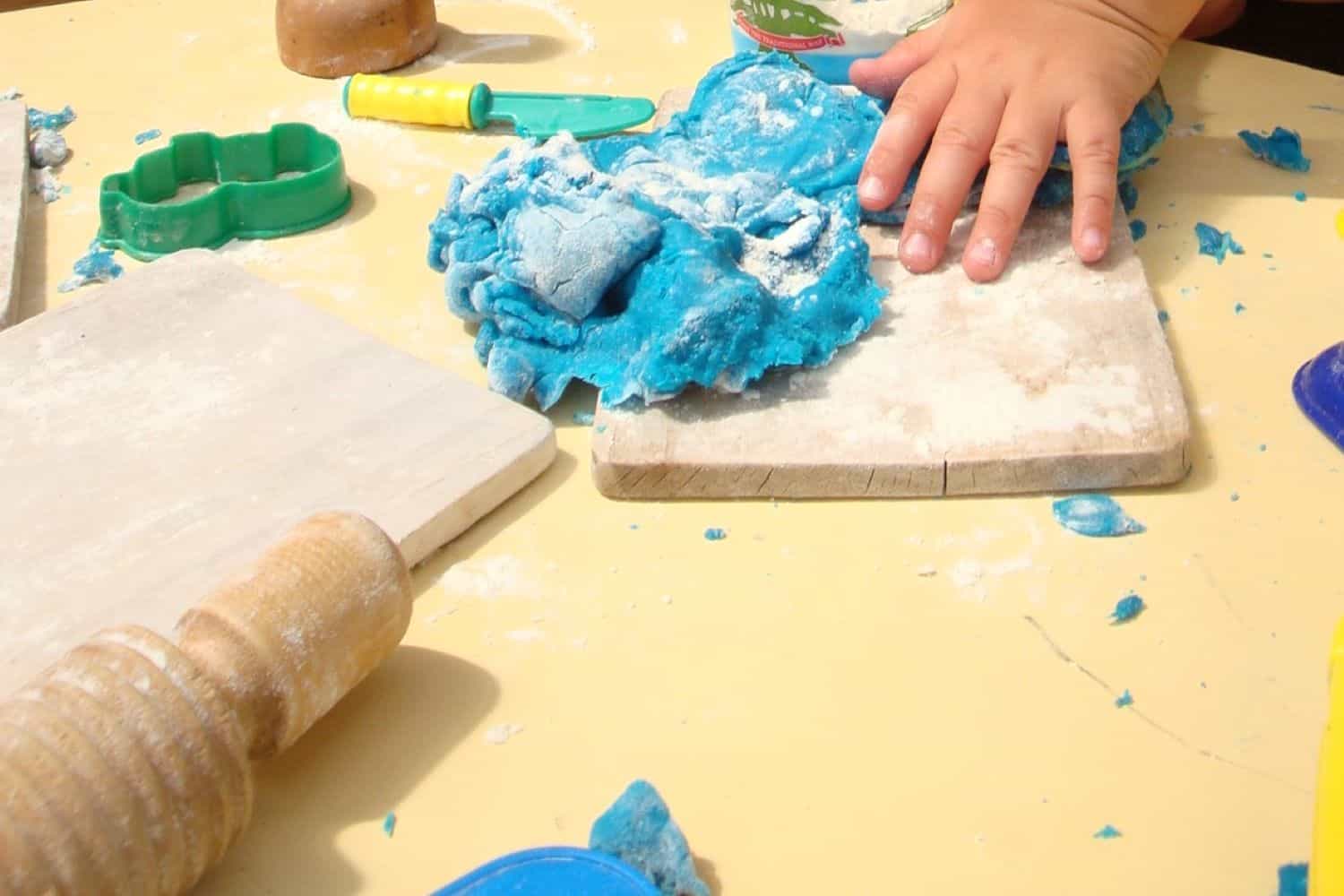
Here we’ve got an all-time favourite recipe of early childhood teachers for cooked playdough.  

We also include recipes for:

– uncooked playdough

– special playdough suitable for shaping into Christmas tree ornaments and gifts to be painted later when hardened.

Playdough is great fun but when the novelty wears off children can become bored and their creativity declines.  So we give you some ideas to keep the playdough fun alive, and invite you to contribute your favourite recipes and ideas too.

First, you may wish to consider cultural concerns on the use of food ingredients and how you may mitigate these concerns.

This is a member/subscriber only post. To access it, please see the message below for details on access and joining.
Already a Teacher Member?

Are you teaching and caring for children or studying for an ECE qualification?

If you are, that’s great!   Join us now, and become a teacher member.

Five Reasons to Join Us
1. Professional recognition

It is prestigious to belong to the OECE – you can skite about it! 

Ask us for an OECE Member Certificate, to include in your professional portfolio as proof you are engaged in reading and professional learning that advances your understanding of the relationship between practice and outcomes for children.

2. Extra benefits

No need to pay a subscription fee for access to NZ’s specialist ECE Newsroom – your member login will let you view everything in the ECE Newsroom. 

No need to pay to access the best NZ and international research – your member login gives you free access to the Research Library and support. 

3. Professional growth and no-judgement help

Teaching resources and advice on probably everything you can think of, including what to wear as a teacher, how to ask for a pay raise, identifying child behaviour causes and responding to needs, new play activity ideas, etc., etc.  all of this is at your finger-tips 24/7 whenever you need help or advice – login to view. 

4. Representation

Did you know that the OECE meets personally and regularly with the Ministry of Education national team, and the regulations committee and other forums? 

Political leaders and journalists are able to use the OECE to gain deeper knowledge on a topic or issue, and we provide a sounding board for ideas and feedback.

The OECE promotes safe working environments for teachers.  We also promote the absolute need for full pay parity with school teachers for all certificated teaching staff working in teacher-led centres and in home-based, and whether permanently or casually employed. 

5. Value for Money

We are committed to keeping membership prices affordable and providing value for money. 

Teacher membership is just $89 for a full year, or save by joining for 2 years.

Has this been useful?  Give us your feedback.

You are welcome to add a link to this page on your website. Copyright belongs to the OECE so please do not copy any content without our written permission.

Information provided is of a general nature. It is provided ‘as is’, and we accept no liability for its accuracy or completeness. See our Terms and Conditions.

Related Posts

rugby world cup

Under-5s Rugby

Teaching Rugby to Children in Early Childhood Education. This fosters a sense of belonging, pride, and achievement.

Rugby is part of NZ’s culture and central to our cultural identity.  (See another article on following and celebrating the Rugby World Cup with children

It is a great sport to introduce to children from about 2 years of a

This is a member/subscriber only post. To access it, please see the message below for details on access and joining.

Read More »
baby sleeping peacefully

Controlled Crying or Training Children to Settle Themselves to Sleep

Controlled Crying.

This article discusses the Controlled Crying method. It gives clarity to conflicting opinions about whether this is a good practice and its benefits. We discuss if this method should and can be used in early childhood education (ECE) settings and in our teaching practice. Suggestions are included for other ways of support

This is a member/subscriber only post. To access it, please see the message below for details on access and joining.

Read More »
early childhood research journal online

The Relationship between Early Childhood Education and Care and English Proficiency at School Entry for Bilingual Children in Australia

FULL REFERENCE: O’Connor, M., O’Connor, E.J., Kvalsvig, A., & Goldfeld, S. (2014). The relationship between early childhood education and care and English proficiency at school entry for bilingual children in Australia. NZ Research in Early Childhood Education Journal. Special Issue: Early Childhood Policy, 17, 161-181.

Log-in to read the full research paper below. Or order a pdf copy of the article from the main NZIRECE Journal page.

ABSTRACT: Children from diverse language backgrounds who enter school with limited proficiency in English may face additional challenges in negotiating this new context. Hence, it is important to consider what antecedent factors might promote English proficiency at school entry. Engagement with early childhood education and care (ECEC) programmes may be one such factor. Drawing on population-level data from the teacher-rated Australian Early Development Index (n=261,147), this study aims to explore the relationship between ECEC (including pre-school, day-care, and other informal non-parental care) and English proficiency at school entry for Australian children from bilingual backgrounds. The findings reveal that attendance at pre-school (OR=1.53, 95% CI=1.37-1.70) was associated with increased odds of being proficient in English at school entry for bilingual children, whereas attending day-care without a pre-school programme (OR=0.78, 95% CI=0.68-0.89), more informal non-parental care (OR=0.72, 95% CI=0.65-0.80), or parental care only (OR=0.59, 95% CI=0.52-0.67) was associated with decreased odds of proficiency in English at school entry. These findings suggest that engagement with pre-school programmes prior to school entry may well present a plausible and modifiable approach to improving English proficiency at school entry for bilingual children, with important implications for policy and programmes that aim to reduce inequality in skills at school entry.

KEY WORDS:

Transition to school; bilingual; Australian Early Development Index (AEDI); school entry, ECE participation.

This is a member/subscriber only post. To access it, please see the message below for details on access and joining.

Read More »
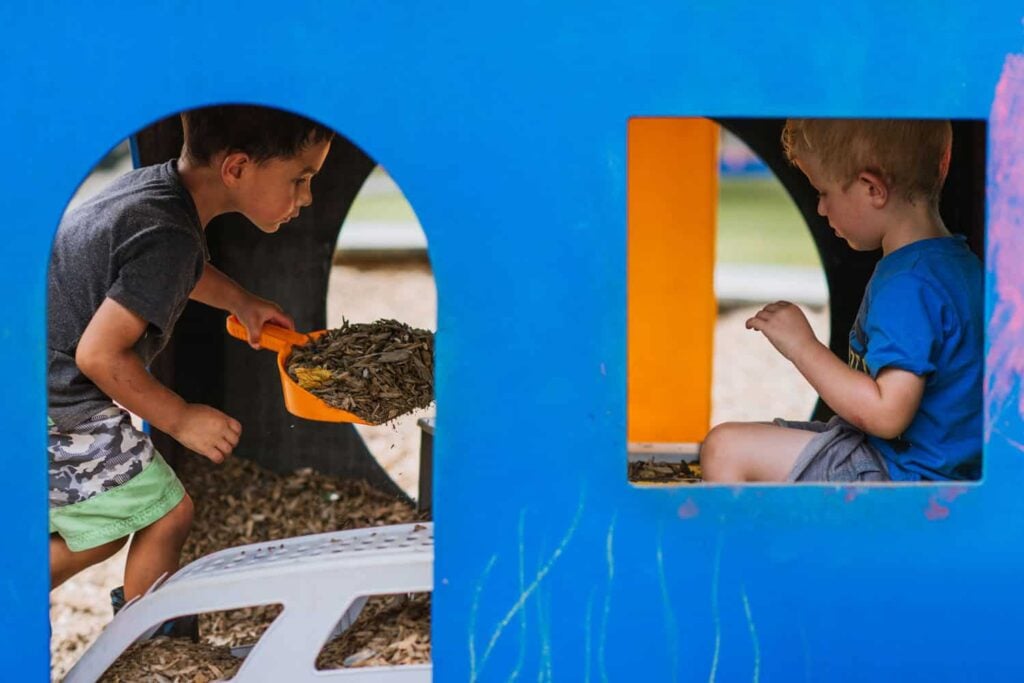
Boys playing outside co-operatively in box with bark chips in early childhood playground.

The Importance of a Play Based Approach

The Play Based Approach – Helping young learners to flourish.

The one thing every parent, caregiver and educator wishes most for a young child is to have a happy and fulfilled childhood.

What is a Play Based Approach?

A play-based approach is a a child-centered approach. When learning and teaching is play-based it is about lea

This is a member/subscriber only post. To access it, please see the message below for details on access and joining.

Read More »

Share This Information

Table of Contents

Table of Contents

The Office of ECE Login

Take Action!

Help spread this vital ECE information, join our free social and email groups and become a member of OECE.

pay parity funding policy

1. Share This Information

2. Follow Our Social Pages

3. Get Regular Updates

Sign up to our free newsletters.

4. Become a Member