Men at Work: Sexism in Early Childhood Education. NZ Teacher Report

Search Entire Website
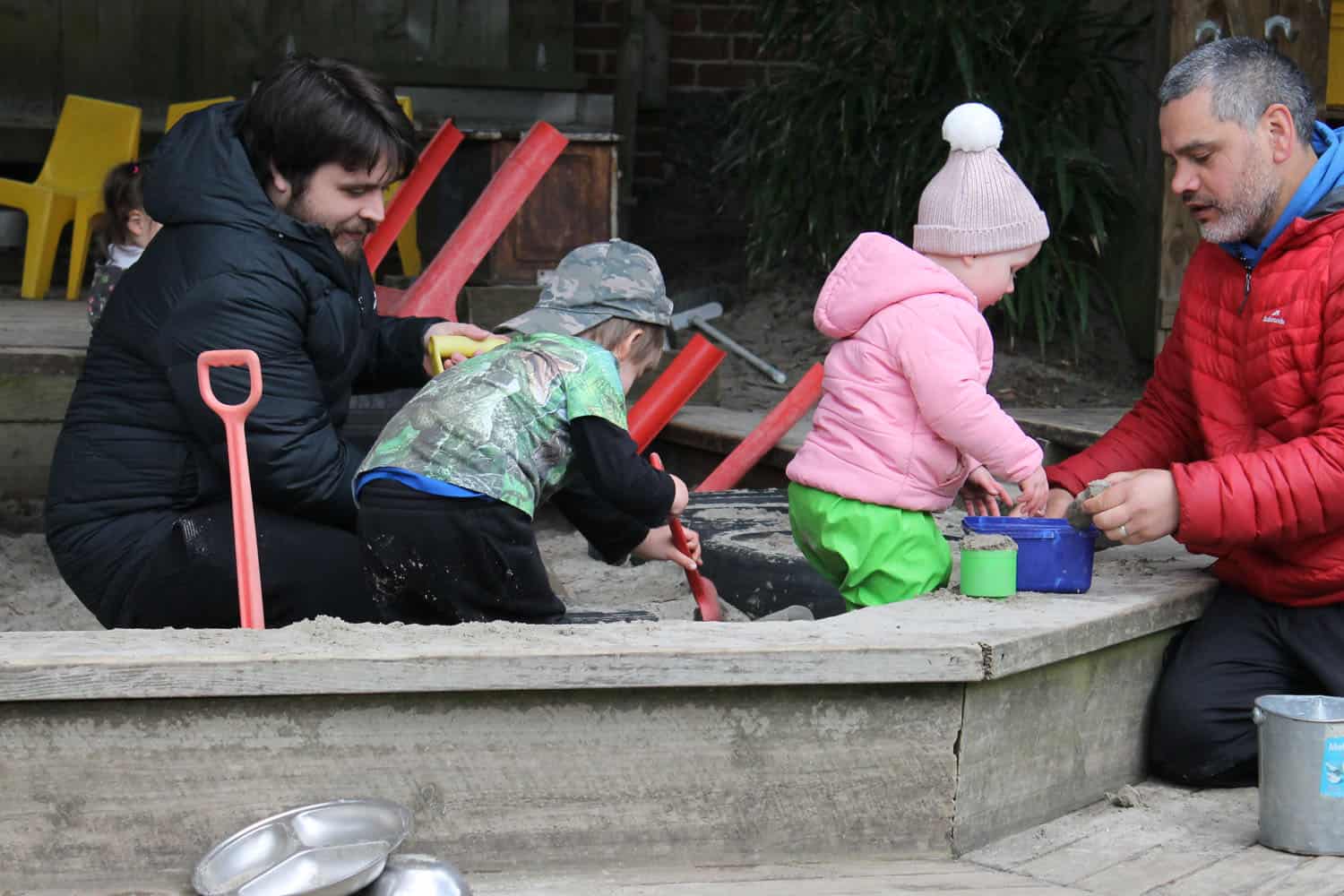
male teachers and children playing and learning in sandpit at early childhood centre.

Sexism in Early Childhood Education.
By Sarah Alexander, Lance Cablk, Adam Buckingham, David Butler and Russell Ballantyne.
Published in 2006.
Wellington.

This report provides a history of men in early childhood education in NZ and covers key milestones and policy issues. It also feature articles written by four men on their experiences of being male and being involved in early childhood work. The writers point to difficulties in being men in a predominantly female job. They also discuss the rewards of the job and give helpful advice for other male (and female) educators.

The child abuse argument has proven to be a convenient excuse to keep men out of an occupation that has been a site for feminist activism since the 1970s. Over a decade after the Peter Ellis, Christchurch Civic Childcare Centre case, it is time to move on and bring gender diversity into the workforce. But the hands of employers are tied.

The government, through the Ministry of Education and TeachNZ, has taken greater responsibility for recruitment and setting qualification requirements and either because of this, or despite this, the early childhood workforce now stands out as probably the ‘pinkest’ occupation in New Zealand.

For example, in nursing and midwifery male registered nurses now make up 6.5% of the workforce, and around 33% of flight attendants are male. Internationally, NZ has amongst the lowest rate of male participation in early childhood teaching. 

So, what can be done to bring and keep more men in early childhood education?

First, debate on including men in early childhood teaching is needed in NZ. The veil of sexism inherent in the profession, due to it being a site for feminist activism since the 1970s and continued promulgation of the idea that men are not safe to work with young children, needs to be lifted and discussed.

Mums and dads and the general public can help by asking questions of the Minister of Education, the Ministry of Education, the teachers’ union, teacher education institutions, and early childhood associations about what they are, and are not, doing to make early childhood teaching more inclusive of men.

Women’s groups, the Ministry of Women’s Affairs and the Human Rights Commission need to consider whether it really is in the best interests of women if nothing is done to bring gender diversity into this very female-intensive profession.  

Second, there should be a combined focus on recruitment and retention. To be successful in the long-term this should be well-planned with knowledge of the needs and perspectives of men and the difficulties currently faced by men in the profession informing plans for advertising, recruitment, training and for ensuring optimal work conditions.

To download and print a copy of the report for your personal use only click here Men at Work 
Has this been useful?  Give us your feedback.

You are welcome to add a link to this page on your website. Copyright belongs to the OECE so please do not copy any content without our written permission.

Information provided is of a general nature. It is provided ‘as is’, and we accept no liability for its accuracy or completeness. See our Terms and Conditions.

Related Posts

teacher wages, pay scales, in childcare and early childhood education

What ECE Teachers and Workers Earn: Pay, Benefits and Conditions

Anyone thinking about getting a job in ECE working in ECE or thinking about moving to a different service will find clear, practical information in this article about pay rates, employment conditions, and what to expect in different roles. It explains everything from starting salaries and pay‑step calculations to workplace rights, benefits, and how to recognise a supportive, professional environment.

Read More »
comforting child

Traumatic incidents at ECEs

Traumatic incidents at ECEs receiving Ministry Traumatic Incident Team support

NEWS/ANALYSIS. 3 July 2025.  

The Ministry of Education responded to 126 traumatic incidents in the last five and a half years.*

It has a Traumatic Incident Team to support ECEs following a traumatic event. The TI teams work alongside ECEs to help them put pro

This is a member/subscriber only post. To access it, please see the message below for details on access and joining.

Read More »
NZ International Research in Early Childhood Education journal

Early Childhood Teachers’ Emotional Labour

Research looking into how early childhood education (ECE) teachers experience emotional labour in their work – their workloads, emotional involvement, and work-life balance. Read the full paper below. Or to order a pdf copy of the article go to the main NZIRECE Journal page.

This is a member/subscriber only post. To access it, please see the message below for details on access and joining.

Read More »
child with binoculars looking out

Financial Sustainability

Early Childhood Service Financial Sustainability.

Unless as much or more money is coming in than is going out, your service could come to be at risk. Here are some strategies for financial sustainability and increasing your revenue stream when necessary. What strategies you agree with and disagree with will depend on your values and the reasons

This is a member/subscriber only post. To access it, please see the message below for details on access and joining.

Read More »
The Office of ECE

Share This Information

Table of Contents

Table of Contents

The Office of ECE Login

Take Action!

Help spread this vital ECE information, join our free social and email groups and become a member of OECE.

pay parity funding policy

1. Share This Information

2. Follow Our Social Pages

3. Get Regular Updates

Sign up to our free newsletters.

4. Become a Member

Public Area Categories
Categories