Job Description: Qualified Teacher

Search in Service Provider
job description for early childhood teacher educator manager staff

Here’s not only a template for a qualified ECE teacher job description but also a sample JD for you to use and adapt. If you would like more guidance and ideas go to the main article about writing JDs.

Template

Service name or Logo

Position description

POSITION/ ROLE:

E.g. Qualified early childhood teacher

POSITION/ ROLE TYPE:

E.g.

This is a member/subscriber only post. To access it, please see the message below for details on access and joining.
Already a Service Provider Member?

Not a member?  Service owners, managers, and community organisations may apply to join as a service provider.  

Five Reasons to Join Us
1. Marketing

It is prestigious to belong to the OECE. Membership is usually by invitation.  Online applications can be made if you think your service meets the criteria. To be a member a service must have as its first priority a focus on being high-quality for children and families.  It must also agree to follow the standards in the Code of Conduct for ECE Services.

Running a parent survey when you want to do one is simple – we handle it for you and provide you with a confidential copy of the results. We will also cover the cost of the survey.

Promoting your service online to parents is taken care of.  The OECE has partnered with the My ECE website and the ECE Parents’ Council Aotearoa to give members free advertising for their service.  For details directly contact My ECE

2. Professional

Free subscription access to the ECE Newsroom – your service provider member login will let you view everything in the ECE Newsroom

Complimentary access to over 25 years of published NZ and international research – your service provider member login gives you free access to the Research Library and support

3. Management

Management and ECE employment resources and advice will be at your finger-tips 24/7. We have so much available in the service provider area of our website – ranging from templates for policies, guidance on managing cashflow and debtors, staff drug use, negotiating pay with staff, and through to topics such as best sandpit design. 

We will make running a staff survey simple for you.  You can use our specially designed survey.  We collect the results and will provide you with a confidential report of the findings. (50% discount available to service provider members).

4. Representation

Did you know that the OECE meets personally and regularly with the Ministry of Education national team, and the regulations committee and other forums? 

Political leaders and journalists are able to use the OECE to gain deeper knowledge on a topic or issue, and we provide a sounding board for ideas and feedback.

Members have a direct line of communication with Dr Sarah Alexander, to bring to Sarah’s attention and discuss what’s affecting your service and community of children, families, and staff.

5. Value for Money

We are committed to keeping membership prices affordable and providing value for money. 

Membership rates start at just $250 for 12-months. Or join for 2 years for only $350.  For providers with multiple licensed services, the rates reduce per service the more licensed services you operate.  

Has this been useful?  Give us your feedback.

You are welcome to add a link to this page on your website. Copyright belongs to the OECE so please do not copy any content without our written permission.

Information provided is of a general nature. It is provided ‘as is’, and we accept no liability for its accuracy or completeness. See our Terms and Conditions.

Related Posts

teacher wages, pay scales, in childcare and early childhood education

What ECE Teachers and Workers Earn: Pay, Benefits and Conditions

Anyone thinking about getting a job in ECE working in ECE or thinking about moving to a different service will find clear, practical information in this article about pay rates, employment conditions, and what to expect in different roles. It explains everything from starting salaries and pay‑step calculations to workplace rights, benefits, and how to recognise a supportive, professional environment.

Read More »
Baby laying on tummy on the floor and looking at other babies.

SUDI or SIDS – What you need to know and actions you can take to reduce the risk

SUDI Sudden Unexplained Death of an Infant.

Should an infant at your early childhood service die in their sleep how would you feel?

You might consider there was nothing you could do to prevent this from happening – that if it was going to happen it was going to happen whether or not the baby was in its parents’ care or your care.

Now

This is a member/subscriber only post. To access it, please see the message below for details on access and joining.


Read More »
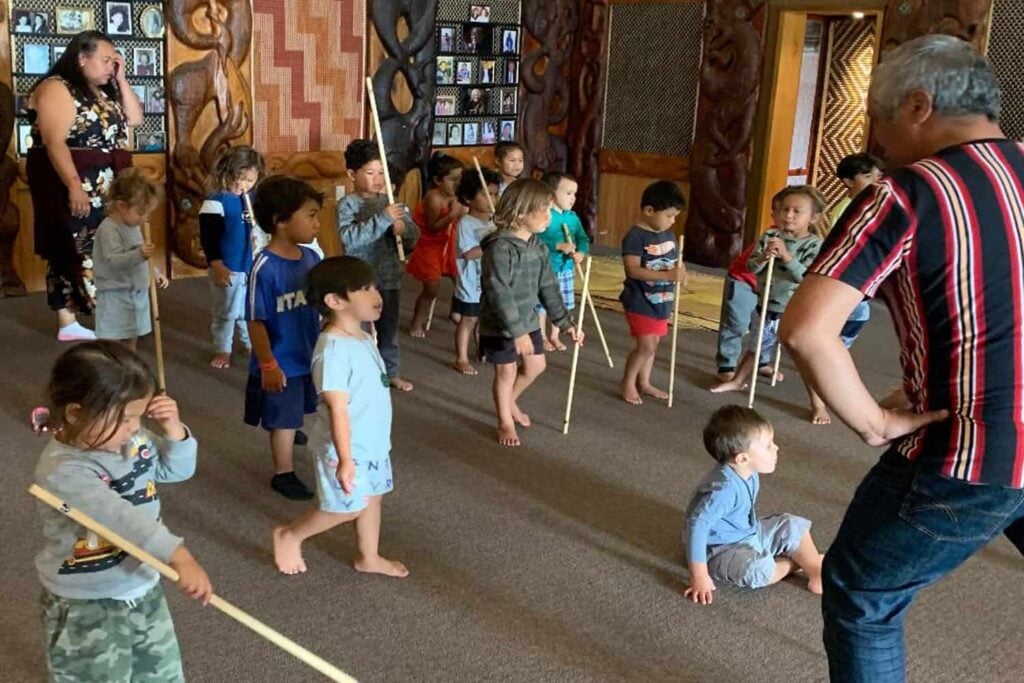
Children supported in their Maori cultural development - learning a haka.

Supporting the Language of Aotearoa. Mauri Ora, Mauri Rere – Striving to Thrive

Supporting the Language of Aotearoa.

Let’s review current teaching practices and see where we go from here. Despite substantial work involving kaupapa Māori over the last two decades our early childhood sector has not been as active as it could have been in reinforcing the speaking of te reo Māori and bicultural practices.

Ngā Wero – The

This is a member/subscriber only post. To access it, please see the message below for details on access and joining.
Read More »
caring and teaching children with additional needs - image of down syndrome child

We’re All in This Together: Approaches to Inclusive Early Childhood Education for Disabled Children in Aotearoa New Zealand and the United States, and What We Can Learn From One Another

FULL REFERENCE: McAnelly, K., Purdue, K., Hall, L.J., Odom, S.L., & Hall, E. (2025). We’re all in this together: Approaches to inclusive early childhood education for disabled children in Aotearoa New Zealand and the United States, and what we can learn from one another.  NZ International Research in Early Childhood Education Journal, 27, pp. 1-16.

ABSTRACT: Research from Aotearoa New Zealand and the United States continues to explore disabled children’s right to an inclusive early childhood education (ECE). In this article we examine ECE provision, key legislation and policy, and research on inclusion in our two countries. We also look at how initial teacher education and professional learning and development programmes help to strengthen inclusive practice in our respective countries. There is a lot that each country can draw on and learn from the other in relation to supporting disabled children’s inclusion in ECE. Drawing on insights from our cross-country comparisons, we offer recommendations aimed at amplifying disabled children’s rights to inclusive ECE.  

KEY WORDS: Disability, inclusion, children’s rights, teacher education, cross-country comparison.

Log-in to read the full research paper below. Or order a pdf copy of the article from the main NZIRECE Journal page.

Introduction

The provision of equitable and inclusive early childhood education (ECE) for disabled children differs from country to country, based on each country’s values and imperatives. Although direct adoption of other nations’ approaches is not advisable, countries can learn from each other and improve their own inclusive ECE practices.

A review of literature highlighted for us – early childhood researchers from Aotearoa New Zealand, hereafter, Aotearoa, and the United States (US) – a lack of cross-national comparative studies on equitable and inclusive ECE for disabled children and their families.  As a step towards addressing that gap, we compared approaches to inclusive education in our respective jurisdictions. We agreed that comparative research could offer fresh insights into how inclusive ECE can be conceptualised and enacted in ways that uphold the rights of disabled children.

This is a member/subscriber only post. To access it, please see the message below for details on access and joining.

Read More »
The Office of ECE

Share This Information

Table of Contents

Table of Contents

The Office of ECE Login

Take Action!

Help spread this vital ECE information, join our free social and email groups and become a member of OECE.

pay parity funding policy

1. Share This Information

2. Follow Our Social Pages

3. Get Regular Updates

Sign up to our free newsletters.

4. Become a Member