

Fireworks Enjoyment and Pet Safety

Search in Teacher
fireworks

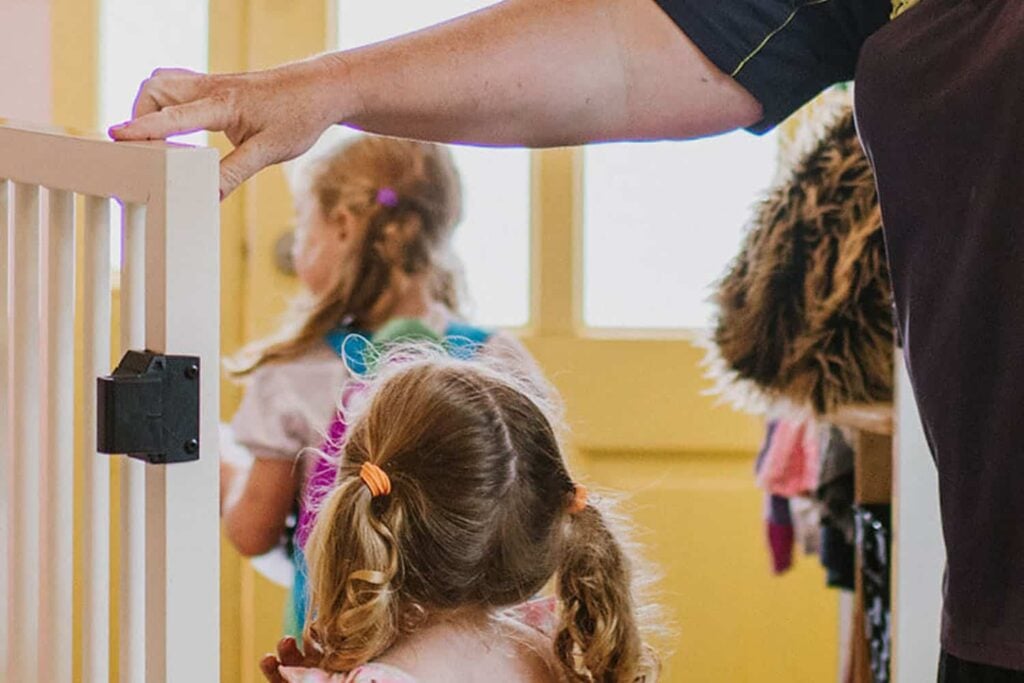
Fireworks safety around young children and pets. Things to teach and talk about with children in conjunction with Guy Fawkes Day and the use of fireworks with children

Should you hold a fireworks display at your early childhood service, or if your children and families are planning to have fireworks at home, these are the rules to follow to kee

This is a member/subscriber only post. To access it, please see the message below for details on access and joining.
Already a Teacher Member?

Are you teaching and caring for children or studying for an ECE qualification?

If you are, that’s great!   Join us now, and become a teacher member.

Five Reasons to Join Us
1. Professional recognition

It is prestigious to belong to the OECE – you can skite about it! 

Ask us for an OECE Member Certificate, to include in your professional portfolio as proof you are engaged in reading and professional learning that advances your understanding of the relationship between practice and outcomes for children.

2. Extra benefits

No need to pay a subscription fee for access to NZ’s specialist ECE Newsroom – your member login will let you view everything in the ECE Newsroom. 

No need to pay to access the best NZ and international research – your member login gives you free access to the Research Library and support. 

3. Professional growth and no-judgement help

Teaching resources and advice on probably everything you can think of, including what to wear as a teacher, how to ask for a pay raise, identifying child behaviour causes and responding to needs, new play activity ideas, etc., etc.  all of this is at your finger-tips 24/7 whenever you need help or advice – login to view. 

4. Representation

Did you know that the OECE meets personally and regularly with the Ministry of Education national team, and the regulations committee and other forums? 

Political leaders and journalists are able to use the OECE to gain deeper knowledge on a topic or issue, and we provide a sounding board for ideas and feedback.

The OECE promotes safe working environments for teachers.  We also promote the absolute need for full pay parity with school teachers for all certificated teaching staff working in teacher-led centres and in home-based, and whether permanently or casually employed. 

5. Value for Money

We are committed to keeping membership prices affordable and providing value for money. 

Teacher membership is just $89 for a full year, or save by joining for 2 years.

Has this been useful?  Give us your feedback.

You are welcome to add a link to this page on your website. Copyright belongs to the OECE so please do not copy any content without our written permission.

Information provided is of a general nature. It is provided ‘as is’, and we accept no liability for its accuracy or completeness. See our Terms and Conditions.

Related Posts

NZ International Research in Early Childhood Education journal

Preschool Teachers’ and Parents’ Perspectives on Primary School Preparation in Singapore

Research on preschool teachers’ and parents’ views on how to best prepare children for school.

FULL REFERENCE: Costales, G.S. and Anderson, R. (2018). Preschool teachers’ and parents’ perspectives on primary school preparation in Singapore. NZ International Research in Early Childhood Education Journal, 21(1), 88 – 99.  

Log-in to read the full research paper below. Or order a pdf copy of the article from the main NZIRECE Journal page.

ABSTRACT: The study undertaken in Singapore sought to understand preschool teachers’ and parents’ views on school readiness with regard to primary 1 preparation to provide a common understanding on how to best prepare children for primary school. Nine preschool teachers and nineteen preschool parents completed a questionnaire and, of this group, four parents and four preschool teachers were also interviewed to gain a deeper understanding of their perspectives. The study revealed that domains of Social and Emotional Development and Aesthetics and Creative Expression were rated by the participants as the most and least important aspects of development respectively in preparing children for primary school. It is recommended that children’s transition to school reflects current research that supports the continuity between preschool and primary school with all stakeholders, parents, teachers and the community, involved.

Key words: Transition to school, primary school preparation, school readiness, school readiness perspectives. 

INTRODUCTION

Providing children with a positive transition experience from preschool to primary school confers short-term and long-term advantages (Petrescu, 2012; Serry, Imms, Froude, Joffe, Heine, & Merrigan, 2014; Yeboah, 2002) and significantly affects their academic and social performance (Chan, 2010; Dockett & Perry, 2009; Yeboah, 2002; Yeo & Clarke, 2006). School transition has been the focus of numerous research studies and educational policies worldwide (Vrinioti, Einarsdottir & Brostrom, 2010); however, limited research had been conducted on this issue in Singapore. 

Nonetheless, emphasis on school transitions is intensely magnified in Singapore, where academic meritocracy is revered as the basis of the country’s growth and development, rewarding the best students on the basis of their ability, performance and achievement (Yeo & Clarke, 2005). The concern is that parents and educators often seem to have differing beliefs on how best to prepare children for their transition to formal schooling (Ang, 2012; Graue, 2006). While preschool teachers urge a holistic approach to preparing children, parents often prefer an academic curriculum in preparing for primary 1 (Ang, 2012). Inasmuch as the community’s belief system inherently determines who is ready for school and how children become ready (Graue, 2006), it is imperative for parents and teachers to concur on a definition of readiness that is most appropriate for their social-cultural context to furnish better support for children’s transition to formal schooling (Noel, 2010). Therefore, based on its findings, this study offers a common understanding from one community of parents and teachers in Serangoon, Singapore, on how preschool children might best be prepared for primary school by identifying parents’ and teachers’ perspectives on readiness and what they deem as important for primary school preparation.

This is a member/subscriber only post. To access it, please see the message below for details on access and joining.

Read More »
Red tape and regulations. Meeting of the Early Childhood Council ECC and David Seymour.

Lobbying in ECE – Who has the Minister’s, and the Ministry of Education’s ear?

Since becoming associate education minister and taking over the ECE portfolio after the 2023 general election, David Seymour has met with ECE sector groups and representatives about 30 times (that equates to more than once a month, on average).

While on the surface that figure might make it seem like he’s engaging with the key stakeholders of the sector regularly, when you comb through his ministerial diaries more thoroughly you’ll see the same names pop up again and again.

Read More »
sand play

Sandpit Design

A good sandpit design for an ECE service sees it being large enough to accommodate half or more of the children attending. It should provide enough room for each child to stand or sit and dig without touching or getting sand on another child. 

In home-based settings, the sandpit design should make sure it is of sufficient size to accommodate

This is a member/subscriber only post. To access it, please see the message below for details on access and joining.

Read More »

Share This Information

Table of Contents

Table of Contents

The Office of ECE Login

Take Action!

Help spread this vital ECE information, join our free social and email groups and become a member of OECE.

pay parity funding policy

1. Share This Information

2. Follow Our Social Pages

3. Get Regular Updates

Sign up to our free newsletters.

4. Become a Member