

Autism

Search in Teacher
Over stimulation. Screaming child

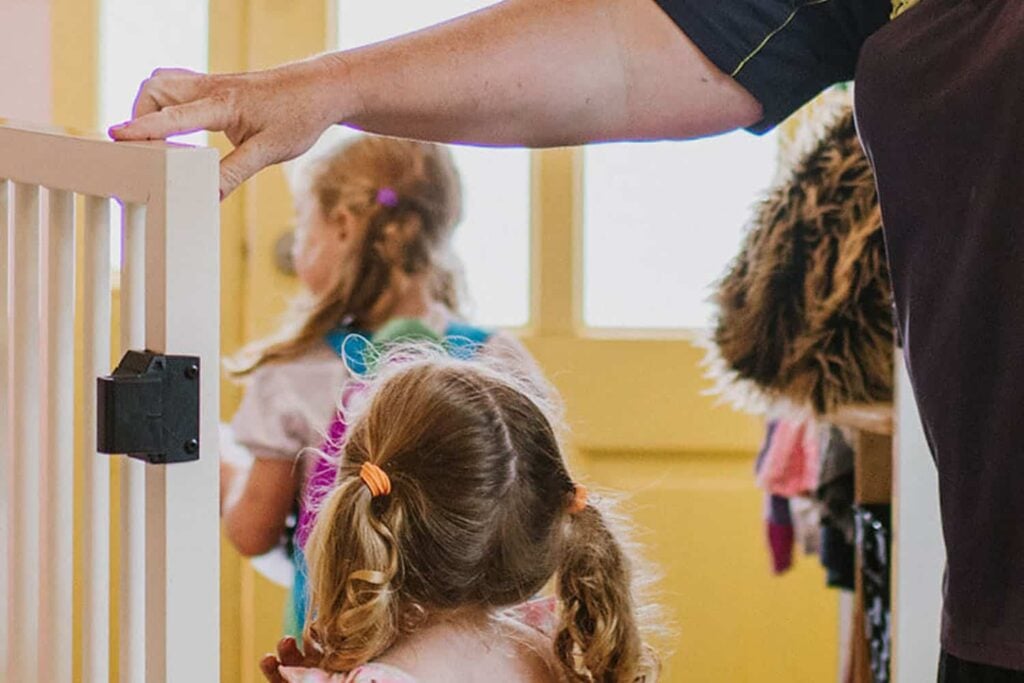
Children with Autism ASD in Early Childhood Education.

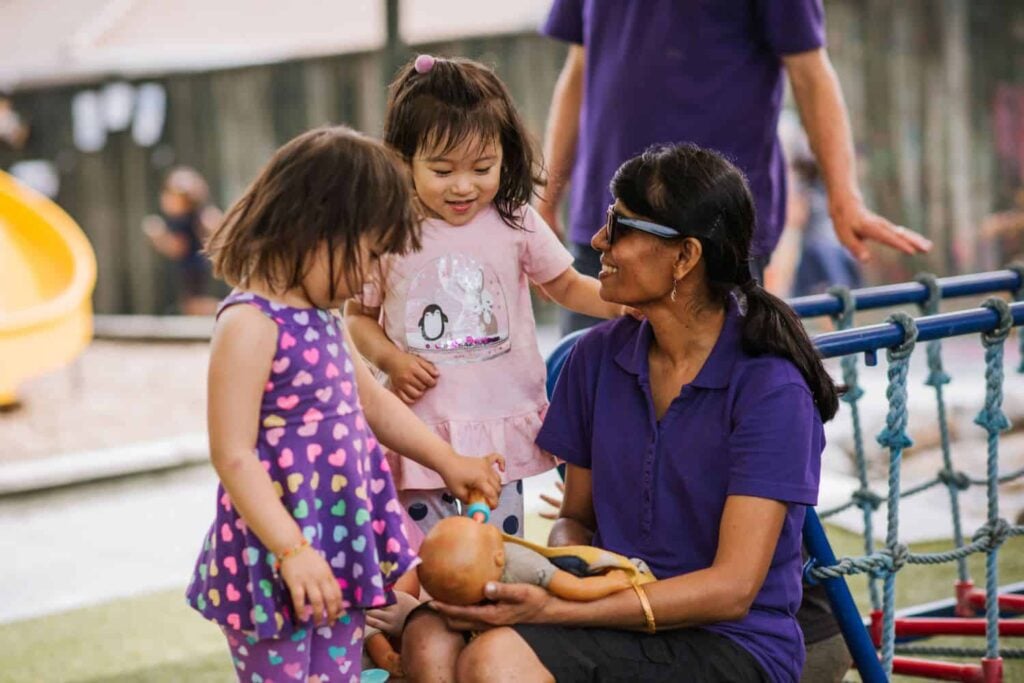
How often have you seen a child acting inappropriately in social situations, appearing to ignore what others say, or over-reacting to loud noises?

Children with such behaviours are often thought to be naughty or treated as a ‘problem’. Some early childhood services have policies tha

This is a member/subscriber only post. To access it, please see the message below for details on access and joining.
Already a Teacher Member?

Are you teaching and caring for children or studying for an ECE qualification?

If you are, that’s great!   Join us now, and become a teacher member.

Five Reasons to Join Us
1. Professional recognition

It is prestigious to belong to the OECE – you can skite about it! 

Ask us for an OECE Member Certificate, to include in your professional portfolio as proof you are engaged in reading and professional learning that advances your understanding of the relationship between practice and outcomes for children.

2. Extra benefits

No need to pay a subscription fee for access to NZ’s specialist ECE Newsroom – your member login will let you view everything in the ECE Newsroom. 

No need to pay to access the best NZ and international research – your member login gives you free access to the Research Library and support. 

3. Professional growth and no-judgement help

Teaching resources and advice on probably everything you can think of, including what to wear as a teacher, how to ask for a pay raise, identifying child behaviour causes and responding to needs, new play activity ideas, etc., etc.  all of this is at your finger-tips 24/7 whenever you need help or advice – login to view. 

4. Representation

Did you know that the OECE meets personally and regularly with the Ministry of Education national team, and the regulations committee and other forums? 

Political leaders and journalists are able to use the OECE to gain deeper knowledge on a topic or issue, and we provide a sounding board for ideas and feedback.

The OECE promotes safe working environments for teachers.  We also promote the absolute need for full pay parity with school teachers for all certificated teaching staff working in teacher-led centres and in home-based, and whether permanently or casually employed. 

5. Value for Money

We are committed to keeping membership prices affordable and providing value for money. 

Teacher membership is just $89 for a full year, or save by joining for 2 years.

Has this been useful?  Give us your feedback.

You are welcome to add a link to this page on your website. Copyright belongs to the OECE so please do not copy any content without our written permission.

Information provided is of a general nature. It is provided ‘as is’, and we accept no liability for its accuracy or completeness. See our Terms and Conditions.

Related Posts

NZ International Research in Early Childhood Education journal

Affordability of Quality Early Childhood Education and Care

FULL REFERENCE: Seagrave, T. (2019). Affordability of early childhood education and care. NZ International Research in Early Childhood Education Journal. Special issue presenting early childhood position papers, 22(2), 1 – 8.

Log-in to read the full research paper below. Or order a pdf copy of the article from the main NZIRECE Journal page.

ABSTRACT: The cost of early childhood education and care is a highly visible issue in Australia and many other parts of the world. The Australian media discusses it regularly and government policy and inquiries often seek to address it. Despite the attention on the financial details, the issue itself is not restricted to cost alone but rather a combination of cost, quality and availability of services. After all price could arguably be reduced significantly at the expense of quality by abolition of regulations, child to educator ratios and fair work laws. It is unlikely however that many would find this an adequate solution. Some explanations for this reduced availability of affordable, quality education and care include high educator pay and increased regulation through the National Quality Framework. This paper argues that much of this issue of affordability of quality early childhood education and care stems from the marketisation and the growth of for-profit services.

Key words: Affordability, cost, price, funding, management, regulation, marketisation.

INTRODUCTION

Throughout the world early childhood (EC) centres are providing education and care for young children while parents engage in paid work. In Australia provision of education and care is by not-for-profit organisations or for-profit EC centres. The not-for-profit organisations include community-based centre management; local or state government centre management; and independent schools. The for-profit organisations include, for example, G8 Education (2018) which operates centres in Australia and Singapore and was floated on the Australian Stock Exchange in 2007. G8 Education (2018) aims to be the largest provider of EC centres within Australia. Prior to the uprise of G8 Education, ABC Learning was the largest provider of EC centres in Australia (Kruger, 2014).  ABC Learning commenced in Australia in 1988, and owned EC centres in Australia, United Kingdom, United States of America, and New Zealand before going into receivership in 2008 (Kruger, 2014).

EC centres’ main costs in their day to day running are wages for the EC educators. Australia has regulatory staff to child ratios (ACECQA, 2018b) based on the premise of provision of health, safety and education for the children in care. For example, in rooms with children aged from six weeks to two years one staff member per four children is required; for two to three-year olds, the ratio is one staff member for five children; and for children aged three to five years one staff member for 11 children is required.

This is a member/subscriber only post. To access it, please see the message below for details on access and joining.

Read More »
Lead advocate and advisor on why Pay Parity for all ECE teachers is vital (image: The petition presentation for the House of Representatives)

Data indicates pay parity is not causing education and care centres to close

After RNZ revealed last Friday that the Government intends to axe the pay parity scheme for education and care teachers, in part to give providers “greater autonomy… to negotiate” with teachers about pay, the Office of Early Childhood Education has been fact checking claims by ECE business lobbyists that pay parity has caused more services to close.

In our view, there is no evidence of this, based on the available statistics.

In a Cabinet paper from April, which was publicly released on July 17, the Ministry of Education wrote to associate minister of education David Seymour that: “The options in this paper begin the process of proactively moving away from the opt-in pay parity system and providing greater autonomy to providers to negotiate with teachers on matters of pay. The wider funding review you are seeking Cabinet approval for provides the opportunity to complete this process”.

Read More »

Share This Information

Table of Contents

Table of Contents

The Office of ECE Login

Take Action!

Help spread this vital ECE information, join our free social and email groups and become a member of OECE.

pay parity funding policy

1. Share This Information

2. Follow Our Social Pages

3. Get Regular Updates

Sign up to our free newsletters.

4. Become a Member